If you have ever tried running a grooming salon off a paper appointment book and a stack of sticky notes, you already know the pain. A client calls to reschedule, you flip through three pages to find their slot, and somewhere in the chaos you forget that their dog is terrified of the dryer. It works, sort of, until it doesn’t. That is usually the exact moment salon owners start googling “pet grooming software” at midnight. This guide walks through what actually matters when picking a system, not just what a sales page promises.
Key Takeaways
- Choose grooming software that is built around the way your salon actually operates, rather than simply choosing the platform with the longest feature list.
- Prioritise grooming-specific scheduling, detailed pet profiles, online booking, automated reminders, payments, and useful reporting.
- Check the full pricing structure before committing, especially SMS charges, additional staff seats, payment fees, and other add-ons.
- Consider whether you need features for boarding, daycare, or mobile grooming before paying for functionality you may never use.
- Always test the booking experience and pet profiles from both the staff and client perspective.
- Look for reliable onboarding and data migration support if you are switching from spreadsheets, paper records, or another platform.
- A good grooming management system should save your team time, reduce missed appointments, improve client communication, and make everyday salon operations easier.
Do You Even Need Grooming Software Yet?
Not every salon needs to jump on this immediately. But there are some pretty clear signs that you have outgrown paper and spreadsheets. If you are double-booking appointments, chasing no-shows more than you would like, or spending your evenings manually texting reminders, that is your answer right there.
Generic scheduling software like Google Calendar or basic booking apps can get you through the early days. The trouble is they were never built with grooming in mind, so they stop fitting the moment your business gets a bit more complex. A basic calendar does not know that a Goldendoodle full groom needs three hours while a nail trim needs fifteen minutes.
The Features That Actually Matter
There is a long list of features grooming platforms like to advertise, and honestly, a lot of them sound impressive on a demo call but barely get touched once you are actually using the software day to day. Here is what tends to make a real difference.
Grooming-Specific Scheduling: This sounds obvious, but it is worth saying anyway. Your calendar should not treat every appointment the same way. Look for software that lets you set variable appointment lengths based on service type and breed complexity and lets multiple groomers work off the same calendar without stepping on each other’s bookings.
Pet Profiles That Actually Remember Things: A generic CRM stores a name and a phone number. A proper grooming CRM stores the stuff that matters for the actual groom, like breed and coat type, weight and size class, vaccination records with expiration dates, temperament notes like “muzzle-trained” or “anxious around dryers,” and what shampoo or cut was used last time. That last part is what makes a brand-new groomer look like they have known a client’s dog for years.
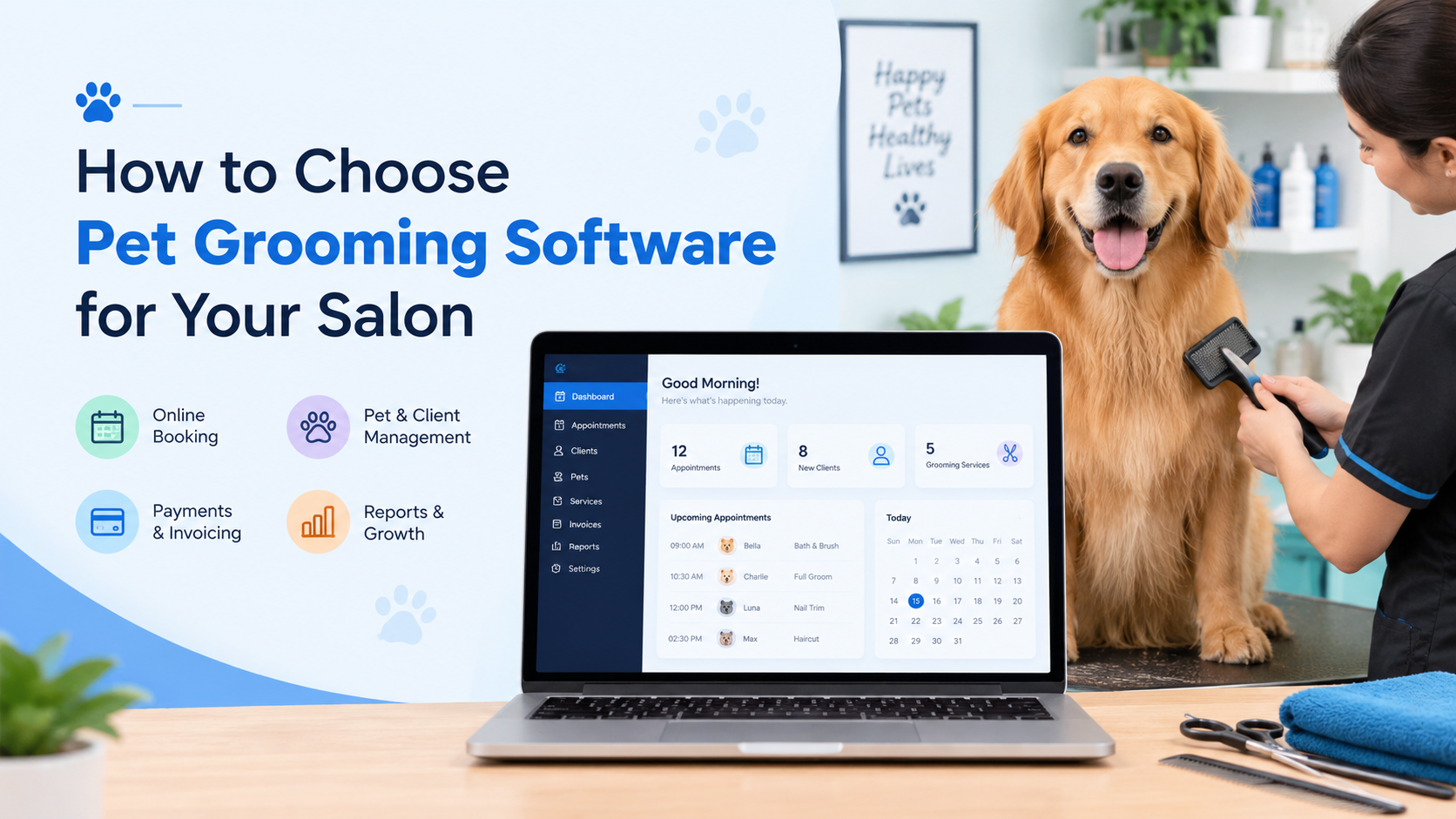
Online Booking Clients Will Actually Use: If you want to see this in practice, Pet Care OS offers 24/7 online booking with automatic reminders. Clients can pick a service and a slot at any hour, and your team no longer has to answer every booking call.
Automated Reminders: This one is underrated. SMS and email reminders alone can reduce no-shows by roughly half, and that protects both your schedule and your revenue. Some platforms meter texting per message, while others include unlimited two-way SMS. For a groomer sending anywhere from 50 to 150 texts a week between confirmations and “your pup is ready” messages, that difference adds up fast.
Deposits and Integrated Payments: Chasing payments after a service is finished is awkward for everyone involved. Software that lets you collect a deposit at booking time is one of the most effective tools for stopping no-shows before they happen, especially with new clients. Integrated payment processing at checkout, including tap-to-pay and tipping, also keeps things moving without a separate system.
Reporting That Tells You Something Useful: Once you get past the first few months, reports on revenue per groomer and rebooking rate are what actually drive decisions, not just a pretty dashboard. If you run your business by the numbers, this is worth paying attention to during your trial.
Mobile Support, If You Need It: If any of your groomers work on the road, route planning and mobile checkout are a completely different feature set from in-salon booking. Do not assume every platform handles this well just because it has a mobile app.
Different Salons Need Different Things
You do not need to compare every platform on the market to make a good decision. It helps more to think in terms of categories, since most software on the market tends to lean toward one of a few general profiles.
Feature-Rich Platforms: Some platforms are built for established, high-volume salons and pack in almost every feature imaginable, from staff management to marketing automation. That depth is great if you will actually use it, but it often comes with a steeper learning curve and pricier plans, so it is worth checking whether texting or extra staff seats cost more on top of the base subscription.
Grooming & Boarding: Other platforms are aimed at businesses that combine grooming with boarding or daycare under one roof, which matters if that is genuinely your setup, but is overkill if grooming is all you do.
Veteran Platforms: There are also veteran platforms that have been around for years and lean on strong, detailed reporting, though the interface can feel a bit dated compared to newer options.
Budget-Friendly Tools: On the other end, there are lighter, budget-friendly tools built specifically for solo groomers or small teams, often with simpler pricing and features like unlimited two-way texting instead of per-message charges, and mobile-first platforms designed around route planning for groomers who work out of a van rather than a fixed location.
None of this means one type of software is objectively “the best.” The right one depends entirely on your setup, whether that is a one-person mobile van or a ten-chair salon with a waitlist three weeks deep. It is worth trialing a couple of options from different categories before you decide, rather than assuming the most feature-packed one automatically wins.
Questions Worth Asking Before You Commit
Before you sign up for anything, it helps to actually sit with a few honest questions rather than just comparing feature lists.
- Does the pricing page tell you the real cost, including SMS or texting limits, or are there hidden fees waiting for you after month one?
- Is the booking flow request-based, direct, or does it offer both, and which one fits how your clients actually behave?
- Can you pull up a client’s full pet profile on your phone two minutes before their appointment and know exactly what you are walking into? If the answer is yes, the CRM is doing its job.
It is also worth checking how the company handles onboarding. Switching systems can feel intimidating, especially if you are moving years of client records out of spreadsheets or an older platform. A structured onboarding process, where the team actually learns your scheduling rules and communication habits, makes that transition far smoother than being handed a login and a help article.
Why Choose Our Pet Care OS for Your Grooming Salon?
Shine Dezign provide a dedicated and specialized pet care management software; which foster on exclusive features to help your salon and pet grooming business flourish to its fullest.
All-in-One Management: Manage appointments, pet profiles, client records, services, and daily salon operations from one centralised platform.
Simpler Daily Workflows: Reduce time spent on manual scheduling, paperwork, and switching between different tools.
Better Client Experience: Keep important pet information organised and make bookings and communication easier for your clients.
Built to Grow: Pet Care OS can support grooming businesses as their client base, services, and day-to-day operations grow.
Conclusion
The right pet grooming software should make your salon easier to manage, not add another complicated system to your workload. Focus on the features that solve your actual problems, whether that means better scheduling, pet records, automated reminders, payments, or reporting.
Before committing, compare the real pricing, test the platform during a trial, and make sure it fits your team’s workflow. A good system should save time, reduce administrative work, and help you deliver a better experience for both clients and their pets.
Your questions, our answers
It helps salons manage appointments, pet records, client information, reminders, payments, and daily operations.
Look for scheduling, pet profiles, online booking, automated reminders, payments, reporting, and mobile access.
Yes. It can reduce manual work and make appointments, records, and client communication easier to manage.
Automated reminders and deposits can help reduce missed appointments.
Pricing varies by platform. Always check for additional SMS, payment, staff-seat, or add-on charges.
Test the booking process, pet profiles, pricing, mobile experience, reporting, customer support, and onboarding options.