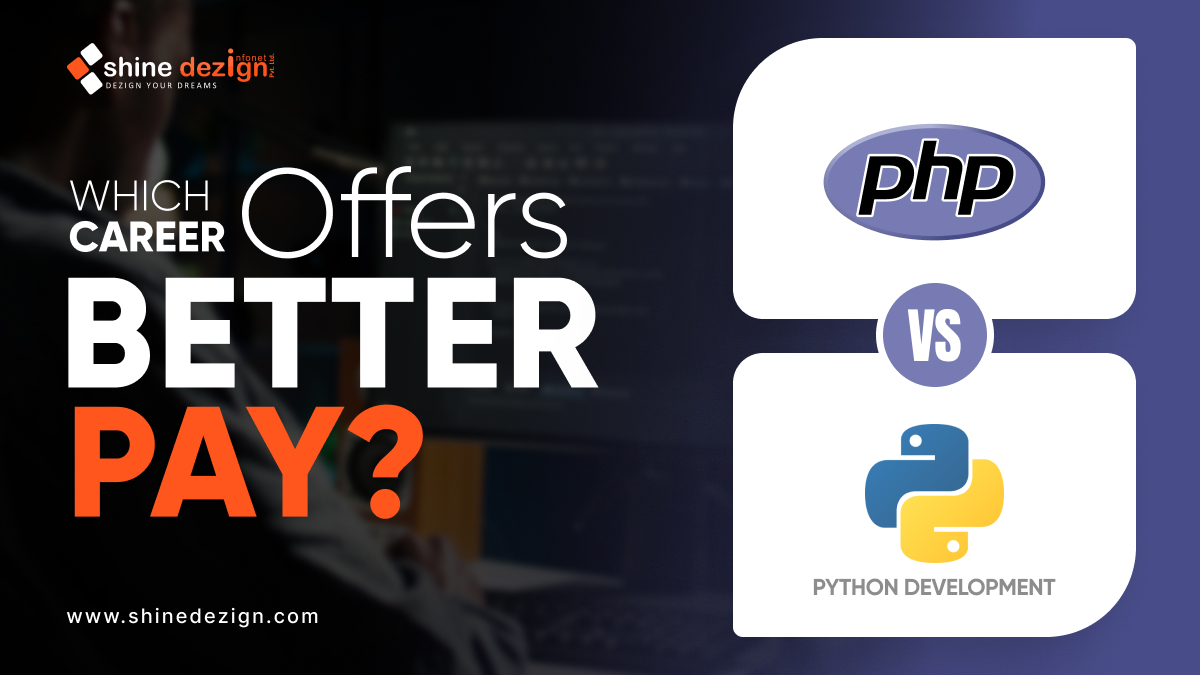
Choosing between PHP and Python for a development career is about finding good job options and fair pay. In 2026, both languages are popular for web development. PHP works well for standard web applications, while Python is more versatile, supporting a wider range of uses, including AI features. If you are a student or new developer, this guide is beneficial for learning about the main differences on PHP vs Python, and job opportunities with average salaries in India.
What is PHP?
PHP was originally created by Rasmus Lerdorf in 1994. PHP stands for Hypertext Preprocessor. It is a free, open-source language used for web development for many years. It lets you add code to HTML files, and the server processes it to create changing content, such as login pages, forms, or pages that pull data from databases. It is common for websites and apps, often used with MySQL for data storage.
Examples include WordPress, Facebook, and online stores. PHP comes with free tools and easy setup options. Also, newer versions focus on faster performance and better security for larger projects.
Stronger Security, Stronger Integrations
PHP is a practical choice for students starting with hands-on projects. Here are some key benefits:
Simple to Learn for Beginners: PHP is easier than many languages, even for those new to coding. One file can create a full webpage, so you see results quickly without reading long guides.
Clear Syntax: The way you write code in PHP is logical and not confusing. It helps beginners avoid common mistakes and focus on solving problems.
Free and Easy to Access: As an open-source tool, PHP costs nothing. You can use it on your computer without extra fees, which is helpful for students working on group projects or sharing code online.
Good for Building Interactive Sites: PHP helps create websites that respond to users, like forms or shopping carts. This builds useful skills for job portfolios.
Works Well with Databases: It connects easily to common databases like MySQL or SQLite. This is useful for school projects that involve storing or retrieving data.
Suits Different Skill Levels: PHP works for basic pages or more advanced systems. It helps with fast project completion without too much complexity.
Large Community and Help Available: There are many online tutorials, forums, and guides. If you get stuck, you can find answers quickly from other users.
Runs on Many Systems: PHP works on Windows, Linux, Mac, or other setups, and with servers like Apache. This lets you test code in different environments.
Fast Performance: It uses memory well, which keeps websites loading quickly, even with more visitors. This is good for projects like online stores.
Basic Security Features: PHP includes ways to protect against common issues, teaching safe coding habits from the start.
Courses in PHP often focus on practical work, which helps with job skills. These skills can apply to areas like marketing or health apps, not just IT.
What is Python?
Python is a high-level language created in 1991 by Guido van Rossum. It uses simple, easy-to-read code that focuses on clear writing. Python works in many areas but is strong for web development, where it handles the behind-the-scenes work for changing websites, simple tasks, and data tools. Frameworks like Django and Flask help build sites from basic blogs to apps with AI.
What are the Benefits of Learning Python for Students?
Python is a good option for students in 2026. It is easy to start with, but can handle complex work, leading to jobs in web development and other fields. Here are the main benefits:
Easy to Read and Start: The code is straightforward, so beginners learn quickly. You spend more time creating than fixing errors, which helps with schoolwork or events.
Works in Many Fields: Python is used for web development, data analysis, simple automation, AI, and more. You can add features like smart suggestions to a website using ready-made tools.
Quick Testing: You get immediate results when running code, so you can build and change projects fast. This turns ideas into working examples for teachers or job applications.
Strong Job Demand: Skills in Python help you stand out for roles in web work, automation, and data. Starting jobs pay well, and openings are at big companies and small startups.
Large Community and Tools: There is a big group of users with free guides, discussions, and code libraries. This helps when learning on your own, especially for web parts like connections to other systems.
Grows with You: Begin with basic web scripts using Flask, then move to larger apps with Django, which includes security and easy management. It teaches solid habits for teamwork.
Ready for Future Tech: Python leads in AI for websites, like custom user experiences, and automation. It also fits studies that mix web work with data display.
What is the Difference Between PHP and Python?
| Aspect | PHP | Python |
| Release Date | 8 June 1994 | 20 February 1991 |
| Creator | Rasmus Lerdorf (originally) | Guido van Rossum |
| Type | Server-side scripting language, object-oriented | High-level, interpreted, object-oriented (also supports procedural) |
| Primary Usage | Web-specific: creating dynamic HTML content, generating XML, Flash animations, graphics, and PDF files | General-purpose: standalone programs, scripting algorithms across domains like web dev, data science, AI |
| Syntax & Readability | Straightforward for web tasks, but less readable for complex logic | Simpler, more readable, easier to learn, and fun to use compared to PHP, C, and C++ |
| Library Support | Focused on web tools; less extensive for non-web tasks | Enormous library support for various domains |
| Portability & Features | Open-source, ease of use; not designed for general-purpose programming | Powerful, portable, open source; unique features not in other languages |
| Community Support | Newer to web scripting; powerful but limited extensibility compared to Python | Strong growth in CGI scripting, one of the most widely used for web development |
| Strengths | Robust for backend web dev; stick with it for simplicity and reliability | Versatile for backend web dev and beyond; both OOP and procedural |
| Limitations | Limited to web content creation; not ideal for standalone apps | Can be slower for certain web-specific tasks without optimization |
What are the Career Opportunities After Learning PHP and Python (and Average Salaries)?
City-Wise Average Salaries
| City | Experience | PHP Developer Average Annual Salary | Python Developer Average Annual Salary |
| Chandigarh | 0-5 Years | ₹2.2 Lakhs – ₹9 Lakhs | ₹2.2 Lakhs – ₹11 Lakhs |
| New Delhi | 0-5 Years | ₹3 Lakhs – ₹9.6 Lakhs | ₹2 Lakhs – ₹10 Lakhs |
| Mumbai | 0-5 Years | ₹3 Lakhs – ₹11 Lakhs | ₹2 Lakhs – ₹10 Lakhs |
| Pune | 0-5 Years | ₹2.7 Lakhs – ₹9 Lakhs | ₹3.5 Lakhs – ₹15 Lakhs |
| Hyderabad | 0-5 Years | ₹3 Lakhs – ₹10 Lakhs | ₹3.5 Lakhs – ₹15 Lakhs |
| Bangalore | 0-5 Years | ₹3 Lakhs – ₹11.6 Lakhs | ₹4 Lakhs – ₹15 Lakhs |
| Chennai | 0-5 Years | ₹2.8 Lakhs – ₹7.2 Lakhs | ₹2.4 Lakhs – ₹16 Lakhs |
| Gurugram | 0-5 Years | ₹3.3 Lakhs – ₹11.5 Lakhs | ₹4 Lakhs – ₹20 Lakhs |
| Noida | 0-5 Years | ₹3.4 Lakhs – ₹8.9 Lakhs | ₹4.4 Lakhs – ₹18 Lakhs |
| Kolkata | 0-5 Years | ₹2 Lakhs – ₹6 Lakhs | ₹2.6 Lakhs – ₹12 Lakhs |
Designation-Wise Average Salaries
| Designations | Experience | PHP Developer Average Annual Salary | Python Developer Average Annual Salary |
| Web Developer | 0-5 Years | ₹2.4 Lakhs – ₹9.6 Lakhs | ₹3.2 Lakhs – ₹17 Lakhs |
| Full Stack Developer | 0-5 Years | ₹3.3 Lakhs – ₹18 Lakhs | ₹4.2 Lakhs – ₹10 Lakhs |
| Software Engineer | 0-5 Years | ₹4.2 Lakhs – ₹7 Lakhs | ₹6 Lakhs – ₹23.5 Lakhs |
| Application Developer | 0-5 Years | ₹3.6 Lakhs – ₹6.5 Lakhs | ₹4.8 Lakhs – ₹10.2 Lakhs |
| Team Lead | 0-5 Years | ₹3.2 Lakhs – ₹7.8 Lakhs | ₹4 Lakhs – ₹16.5 Lakhs |
(Source: Ambitionbox)
Secure an opportunity to enhance your skills to grab high-paying jobs with Shine Dezign’s exclusive PHP Training Program and Python Development Course.
In our PHP Training Program, learn the fundamentals of programming, PHP servers, the Laravel ecosystem, and advanced tools to create efficient web apps. With our industrial training, you can equip yourself for exciting job roles like PHP/Laravel Developer, Web Application Developer, and many other roles.
Whereas Shine Dezign’s Python Training Program teaches basics like syntax and loops, along with advanced handling, capstone projects, and machine learning, and many more skills. Python, being beginner-friendly, help students to grab exciting job opportunities with good pay scale.
Why Choose Shine Dezign?
- Shine Dezign provides hands-on learning experience with expert mentorship.
- Students can learn while working on live projects with experts.
- Certificate is provided to every student after completion of training.
- Student’s performance is keenly reviewed by industry experts to helps them improve.
- In-house placement opportunity is provided to deserving students.
Conclusion
Both PHP and Python offer solid career paths in 2026. PHP provides steady opportunities in web development, with roles like PHP Developer, Database Administrator, Laravel Developer, and Web Application Developer. Python opens doors to diverse fields like web development, data science, machine learning, AI, and software development. Both languages have strong job demand, and Python often sees faster growth due to its versatility. Practice with projects and keep learning to build a strong career in either language.
Your questions, our answers
Python is easier for beginners because its code is simple and clear. PHP is straightforward for web tasks, but it can feel more complex at first.
Yes, learning both is a good idea. It gives you more skills for different jobs and can help increase your pay. Start with one based on your goals.
Common PHP jobs include PHP Developer (₹25K/mo), Web Application Developer (₹8L/yr), and Laravel Developer (₹25K/mo). They focus on building and maintaining websites.
Python jobs include Web Development (₹20K/mo), Data Science (₹20K/mo), Machine Learning (₹5L/yr), and Software Development (₹5L/yr). They cover web, AI, and data work.
Yes, Python is strong for AI, machine learning, and new trends like custom web features. It has many tools for these areas, making it future-proof.
PHP is great for pure web tasks like dynamic sites and databases. Python works well, too, with frameworks like Django, but it's more versatile overall.