
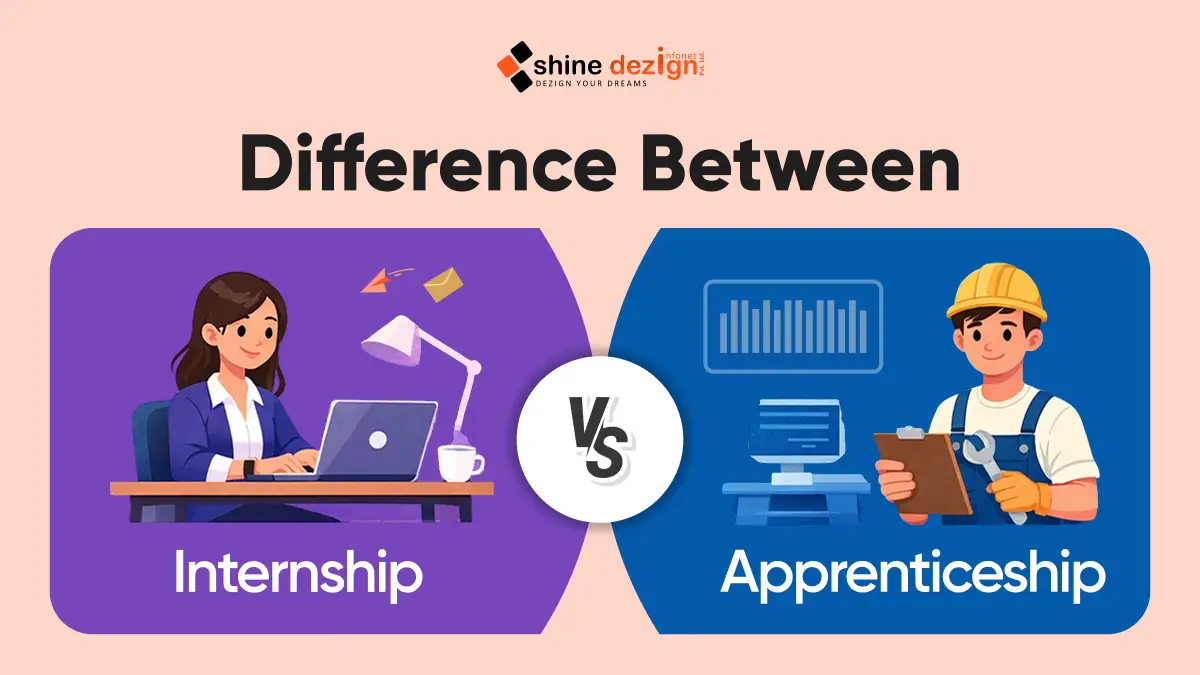
Deciding how to enter the professional world after school or college can be both exciting and overwhelming. Two popular pathways that help students gain real-world experience are apprenticeships and internships. Both offer valuable exposure to work environments, help build skills, and can significantly boost your career. Yet they are very different in purpose, structure, and outcomes. In this blog, we will break down everything you need to know about internship vs. apprenticeship, highlight their differences, talk about their benefits, and help you decide which one might be right for your career goals.
What Is an Internship?
An internship is a short-term work experience offered by companies to students, recent graduates, or career changers. It gives you a chance to observe professionals at work, understand industry operations, and gain exposure to a field that interests you. Internships typically last from a few weeks to a few months, often aligned with semester breaks or summer holidays, and can be full-time or part-time depending on the organisation and your availability.
Interns may be asked to support daily tasks, assist in ongoing projects, sit in on meetings, or perform simple assignments that help a team function. Internships may be paid, unpaid, or compensated with college credit, and the experience gained is usually richer than classroom learning but less intense than full-fledged work.
What are the Benefits of Internship?
Participating in a professional internship program can further enhance these benefits by providing guided training and real project exposure.
Exposure to Real Work Environments: Internships allow students to step beyond textbooks and classrooms into real workplace settings. By observing how organisations function on a daily basis, interns gain a clearer understanding of professional expectations, workflows, and workplace culture, helping them connect academic knowledge with real-world application.
Opportunity to Explore Multiple Roles and Industries: Because internships are typically short-term, students can complete more than one internship across different fields or job roles. This flexibility allows them to explore various career options, discover their interests, and make more informed decisions about their future career path.
Building a Strong Professional Network: Internships offer direct access to industry professionals, mentors, and peers. These connections can prove extremely valuable in the long run, opening doors to references, recommendations, mentorship, and even full-time job opportunities after graduation.
Development of Soft and Technical Skills: Through hands-on involvement in workplace tasks, interns develop essential soft skills, including communication, teamwork, time management, and problem-solving. At the same time, they gain technical and industry-specific skills that enhance their overall professional competence.
Resume and Career Profile Enhancement: Internship experience adds credibility to a resume by demonstrating initiative, practical exposure, and a willingness to learn. Employers often value candidates with internship experience as they are better prepared for professional roles and adapt more easily to workplace environments.
What Is an Apprenticeship?
An apprenticeship is a long-term, structured training programme that combines on-the-job training with classroom or formal education. Apprentices work alongside experienced professionals or mentors, learning practical and trade-specific skills that prepare them to become skilled workers in a particular occupation.
Apprenticeships may last anywhere from one to three (or even more) years, depending on the industry and skill level. Unlike internships, apprentices are typically considered part of the workforce; they earn wages, gain hands-on experience, and become industry-ready by the time the programme ends.
What are the Benefits of Apprenticeship?
Apprenticeships are ideal for individuals who are ready to commit to a specific career path and want to gain deep, job-focused expertise. They combine hands-on work with structured learning, offering long-term career benefits.
Earn While You Learn: One of the most significant advantages of apprenticeships is that they are usually paid. Apprentices earn a regular wage while receiving training, allowing them to support themselves financially while developing valuable, job-ready skills.
Structured Learning and Skill Mastery: Apprenticeships follow a well-defined training framework that focuses on mastering specific skills. This structured approach ensures that apprentices gain in-depth knowledge and practical expertise, preparing them to perform their roles confidently and independently.
Industry-Recognised Qualifications: Most apprenticeship programs lead to formal certifications, diplomas, or credentials that are recognised by the industry. These qualifications significantly enhance employability and serve as proof of professional competence in a chosen field.
Higher Chances of Long-Term Employment: Many organisations view apprenticeships as a talent pipeline. As a result, apprentices often receive full-time job offers upon successful completion of their training, making apprenticeships a strong pathway to stable and long-term employment.
Mentorship and Hands-On Guidance: Apprentices work closely with experienced professionals who provide continuous mentorship and feedback. This one-on-one guidance helps apprentices gain practical insights, refine their skills, and develop confidence, advantages that are difficult to achieve through classroom learning alone.
Internship vs. Apprenticeship: Key Differences
When comparing Internship vs. Apprenticeship, understanding the core differences helps you pick the right path.
Duration and Commitment
- Internships are usually short-term, from a few weeks to a few months, and offer temporary exposure to real work settings.
- Apprenticeships are long-term engagements, often lasting one to three years or more. They require a higher level of commitment since they involve mastering skills over time.
Structure and Learning
- Internships are generally less structured. You might learn by observing professionals, assisting in daily tasks, and completing assignments that help with everyday business needs.
- Apprenticeships follow a formal and structured training plan where you learn specific competencies in your trade or occupation, often alongside classroom instruction or formal courses.
Pay and Financial Compensation
- Internships may be paid, unpaid, or compensated through academic credit. Pay is not guaranteed and varies widely across industries.
- Apprenticeships are usually paid positions where apprentices earn a wage or stipend throughout the training period.
Credentials and Job Outcomes
- Internships do not typically result in formal job qualifications; instead, they strengthen your resume and can help you network.
- Apprenticeships often culminate in industry-recognized credentials or certifications, boosting your credibility and employability in your chosen field.
Mentorship and Skill Training
- Internships generally involve working with a group of professionals and may not focus on one-to-one mentoring.
- Apprenticeships emphasise mentorship. You work closely with experienced mentors who guide your progress, evaluate your skills, and help you grow in your field.
What is the Career Impact and Suitability of Internship and Apprenticeship?
| Feature | Internship | Apprenticeship |
| Goal | Explore career interests and gain experience | Master specific job skills and become career-ready |
| Duration | Weeks to months | Years |
| Pay | Varies (may be unpaid) | Usually paid |
| Outcome | Experience + resume boost | Credential + job prospects |
| Skill Depth | Moderate | High |
| Mentorship | Limited | Extensive |
Which is Better: Internship vs. Apprenticeship?
Internship is better, because:
- Skill Development: Gain real-world skills quickly.
- Networking: Meet professionals who can vouch for you.
- Resume Boost: Stand out to employers.
- Flexibility: Easy to switch fields.
- Low Pressure: No long-term commitment.
Apprenticeship is better, because:
- Paid Learning: Earn a wage while training.
- Certification: Get recognized qualifications.
- Job Security: High employability in trades.
- Mentorship: One-on-one guidance from experts.
- Career Advancement: Clear progression to higher roles.
How Internships and Apprenticeship Work in India?
Internships in India are also widely available, and with initiatives like government internship schemes, opportunities to gain professional experience are increasing for students across sectors.
In India, apprenticeships are often governed by specific regulations like the Apprentices Act, which ensures training rights, wages, and structured learning. After completing 12th or college, students can opt for apprenticeships in sectors such as IT, manufacturing, engineering, hospitality, and more.
Conclusion
In summary, Internships open the door to exploration, while apprenticeships build the path to expertise. Whether in India or abroad, both options can accelerate career growth by bridging the gap between education and real-world work. Internships help you explore career paths, build professional networks, and strengthen your resume, while apprenticeships focus on skill mastery, mentorship, and long-term employment opportunities. Each offers practical experience with different levels of commitment and outcomes. Ultimately, the right choice depends on your interests, financial needs, time availability, and long-term career goals.
Your questions, our answers
The primary difference lies in duration and structure: internships are short-term (weeks to months) for exploration, while apprenticeships are long-term (1-4 years) for skill mastery, often with pay and certifications.
It varies; many internships are unpaid or offer stipends, but some paid internships exist, especially in competitive fields. In contrast, apprenticeships are typically paid.
It depends on goals, such as internships for broad exploration, apprenticeships for hands-on trades like IT or engineering, as per government schemes.
Yes, many people start with internships for exposure and then pursue apprenticeships for depth in a specific field.
No, apprenticeships often don't need formal education beyond high school, making them accessible for those without degrees.
Apprenticeships focus on trade-specific skills, soft skills like teamwork, and often lead to certifications, providing deep expertise.
Yes, apprentices are employees who earn wages while training, unlike interns, who may not be full employees.